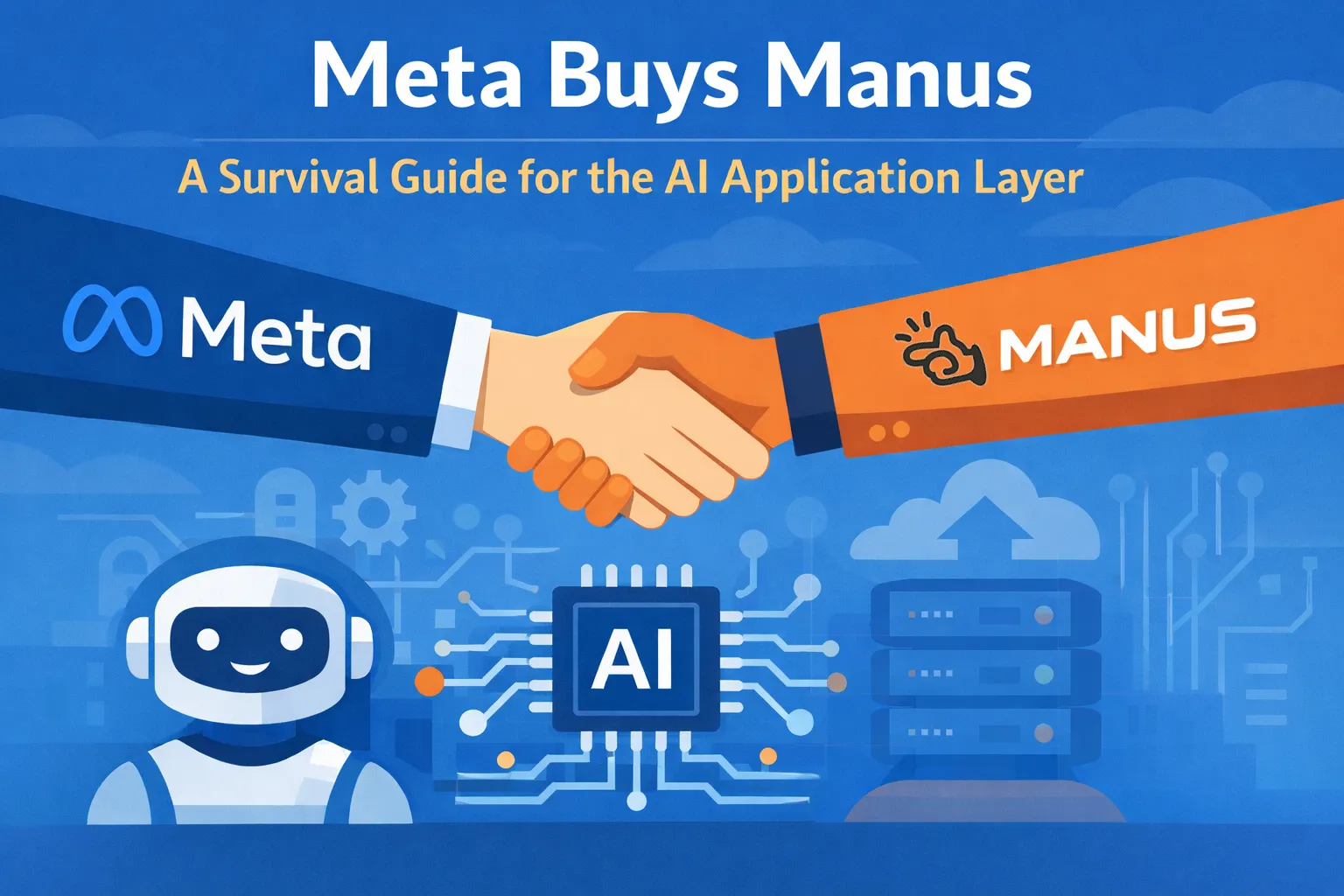
Em 30 de dezembro (PST), Meta anunciou oficialmente A aquisição da Manus, empresa líder no setor de agentes de IA, foi avaliada em mais de 1,4 trilhão de libras esterlinas.
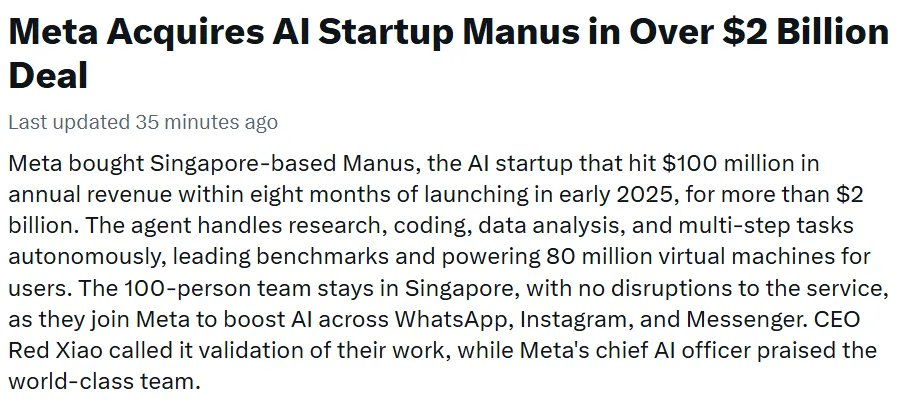
A trajetória da Manus tem sido impressionante. No início deste ano, a empresa explodiu no cenário tecnológico com seu conceito de "primeiro agente de IA de propósito geral do mundo" e estratégias de marketing baseadas na escassez. No início de dezembro, anunciou um recorde no setor, atingindo US$ 1,2 trilhão em Receita Recorrente Anual (ARR) em apenas oito meses. No entanto, poucas semanas após demonstrar um crescimento comercial tão rápido, a Manus foi adquirida pela gigante da tecnologia.
Este evento marca uma iniciativa agressiva da Meta para completar seu portfólio de IA. Além disso, sinaliza uma mudança fundamental para todas as startups de IA focadas na camada de aplicação: em uma era de custos computacionais e capacidades de modelos em rápida evolução, a lógica subjacente para startups de aplicativos está passando por uma transformação radical.
Análise da Lógica de Negócios: Por que sair agora?
Apesar de processar 147 trilhões de tokens e operar 80 milhões de computadores virtuais, a Manus enfrentou sérios desafios em relação à sua economia unitária como entidade independente.
- Custos computacionais insustentáveis: Ao contrário dos chatbots tradicionais, a IA agente requer "circuitos fechados autônomos", que envolvem inferências em segundo plano de alta frequência e renderização de ambientes virtuais. À medida que a base de usuários cresce, os custos de inferência aumentam exponencialmente. Sem infraestrutura de computação própria, a Manus enfrentava altos custos de serviços em nuvem para cada unidade de receita gerada.
- Erosão das vantagens competitivas: A Manus dependia das capacidades de grandes modelos subjacentes. À medida que provedores de modelos como OpenAI e Google integram cada vez mais recursos de agentes diretamente na camada de modelo — como o lançamento de modelos "Operadores" com capacidades de execução nativas — o espaço de sobrevivência para empresas focadas exclusivamente na camada de aplicação está se tornando cada vez mais restrito. Vender a empresa no auge da valorização para obter o suporte computacional da Meta foi a decisão ideal com base na racionalidade do negócio.
- Obstáculos para um IPO: Considerando a experiência da equipe e o atual cenário geopolítico complexo, um IPO independente da Manus nos EUA enfrentaria altas barreiras regulatórias e incertezas. A saída por meio de aquisição proporcionou a melhor liquidez para a equipe fundadora e os investidores iniciais.
A estratégia de Meta: Por que Manus?
Essa aquisição reflete a urgência estratégica da Meta no cenário da IA.
- Posicionamento da Meta AI no mercado: Apesar de possuir a poderosa série de modelos de código aberto Llama, a Meta AI carece de um "aplicativo matador" no mercado consumidor.
- X (Twitter) está aproveitando o Grok com seus dados sociais.
- Google está integrando profundamente o Gemini ao Workspace.
- OpenAI Mantém uma forte presença na mente do usuário.
- Superando a lacuna de "execução": A Meta possui bilhões de usuários no WhatsApp, Instagram e Facebook, mas as interações atuais se limitam a conversas e consumo de conteúdo. A Meta precisa transformar as capacidades da Llama, passando da geração de texto para a execução de tarefas — a principal promessa da IA Agética.
- Realinhamento estratégico de computação e talento: No início de 2025, a Meta estabeleceu o Meta Superintelligence Labs (MSL), liderado por Alexandr Wang, fundador da Scale AI, com o apoio de uma reserva de 600.000 GPUs H100. A aquisição da Manus traz uma equipe de classe mundial com experiência na exploração de "Excesso de Capacidades de Modelo", preenchendo efetivamente a lacuna entre os recursos computacionais da Meta e uma arquitetura de agentes de ponta.
Implicações: Como as startups de IA podem navegar em um cenário dominado por gigantes.
A explosão da tecnologia de modelos em larga escala reduziu as barreiras técnicas para startups, mas aumentou significativamente a dificuldade de sobrevivência comercial. Em um ambiente dominado por gigantes, como se tornar visível e encontrar uma estratégia de saída racional é a questão fundamental para todo empreendedor de IA. A trajetória da Manus oferece um exemplo clássico de perspicácia e estratégia de capital.
Fundamento Essencial: Compreensão Aguçada das Necessidades do Usuário
A tecnologia por si só raramente constitui uma barreira a longo prazo; o verdadeiro alicerce de uma startup é a compreensão precisa das dificuldades enfrentadas pelos usuários.
- Evolução de Monica para Manus: O fundador Xiao Hong não começou com o Manus. Seu produto inicial, Monica, foi baseado em uma profunda compreensão do problema do "copiar e colar". Nos primórdios do ChatGPT, os usuários precisavam alternar constantemente entre o conteúdo da web e a janela do ChatGPT. Monica, como uma extensão da barra lateral do navegador, eliminou esse atrito de interação, permitindo acesso instantâneo à IA em qualquer página da web e rapidamente conquistou milhões de usuários.
- Ajuste dinâmico e pivô: Prevendo que o modo Copiloto (assistivo) seria eventualmente substituído pelo modo Agente (autônomo), a equipe decidiu apostar tudo no Manus. Isso demonstra que o sucesso do passado não pode ser simplesmente replicado; os empreendedores precisam acompanhar as tendências do setor e estar dispostos a se reinventar.
O Caminho de Saída: Equilibrando Capacidade e Visibilidade
Em um cenário de janela de IPO cada vez mais curta e recessão econômica, fusões e aquisições são uma necessidade estratégica que exige execução cuidadosa.
- Capacidade líder do setor: As gigantes adquirem clientes em troca de tempo ou talento. Manus demonstrou orquestração de ambientes virtuais e planejamento de tarefas complexas, preenchendo uma lacuna técnica para a Meta. Resolver problemas de engenharia que as gigantes não conseguem solucionar imediatamente gera alto valor de aquisição, mesmo que algumas funcionalidades dependam de poder computacional bruto.
- Visibilidade suficiente: Ser visto é um pré-requisito. A Manus ganhou força por meio de marketing agressivo e comprovou seu valor comercial com a métrica de 1.000 milhões em receita recorrente anual (ARR). A força técnica deve ser combinada com uma narrativa de mercado sólida para entrar no radar estratégico das gigantes da tecnologia.
- Aproveitamento da infraestrutura: Essa é uma lógica crucial para fusões e aquisições. Se um produto enfrenta dificuldades de forma independente devido aos altos custos de computação, mas pode proporcionar ganhos exponenciais de eficiência dentro do ecossistema de uma grande empresa, ele se torna um alvo de aquisição altamente rentável.
A aquisição da Manus sinaliza a maturação da camada de aplicação de IA. Para empreendedores, produtos simples de "encapsulamento" oferecem poucas oportunidades. O sucesso reside em insights profundos sobre cenários, na criação de produtos com capacidades de entrega autônoma e no aproveitamento da presença no mercado para encontrar caminhos de sobrevivência ou de saída em meio aos gigantes do setor.