

Anthropic lanzó oficialmente su modelo insignia, Claude Opus 4.6, el 5 de febrero de 2026. Como una iteración significativa de Opus 4.5, este modelo introduce optimizaciones técnicas en la profundidad del razonamiento lógico, el manejo de contextos extensos y los flujos de trabajo de agentes autónomos. Desde una perspectiva profesional, analizaré la evolución técnica de Claude Opus 4.6 y su utilidad práctica para abordar problemas críticos del negocio.
Cómo Claude Opus 4.6 resuelve desafíos del mundo real
En mi opinión, el principal coste para los usuarios de IA no suele ser la consulta inicial, sino la posterior aclaración y reelaboración que requieren los resultados imprecisos. Claude Opus 4.6 soluciona estas ineficiencias mediante varias mejoras específicas.
Reducción del refinamiento iterativo en el análisis de documentos extensos
Para el usuario promedio, los puntos de fricción comunes incluyen:
- Organizar materiales fragmentados en informes o presentaciones estructurados.
- Realizar investigaciones comparativas y redactar propuestas estratégicas en múltiples fuentes.
- Mantener la continuidad en proyectos de larga duración (por ejemplo, actualizar iterativamente una versión durante una semana).
Anthropic enfatiza que Claude Opus 4.6 destaca por descomponer solicitudes complejas en pasos prácticos. Su rendimiento mejorado en recuperación de contexto largo combate directamente “contexto podrido“—el fenómeno en el que la adherencia al modelo y la consistencia se degradan a medida que la conversación se alarga.
Eliminación del “cambio de contexto” de alta frecuencia
Los usuarios profesionales suelen sufrir la carga de tener que cambiar constantemente de contexto: alternar entre Excel, PowerPoint y editores de documentos. Esta fragmentación dificulta la concentración y la gestión de la información.
Con el lanzamiento de Claude Opus 4.6 el Microsoft FoundryEl modelo ahora cuenta con una integración profunda con el ecosistema de Microsoft. Puede limpiar y formatear datos de forma autónoma, a la vez que genera arquitecturas de presentación de forma nativa. Esto reduce la migración manual de datos y garantiza un flujo de trabajo más coherente.
Mejora de la estabilidad en tareas de ingeniería de ciclo largo
En los escenarios de codificación, los verdaderos puntos críticos residen en actividades de ingeniería de varios pasos: descomposición de requisitos, control del alcance, consistencia entre archivos y depuración compleja.
La actualización de Claude Opus 4.6 se centra en planificación cuidadosa y sostenido desempeño agenteEstá diseñado para ser más confiable dentro de bases de código empresariales a gran escala, y se destaca específicamente en encontrar sus propios errores lógicos durante las revisiones de código. AWS Bedrock ha destacado que Claude Opus 4.6 está diseñado específicamente para estos proyectos de ciclo largo y requiere significativamente menos supervisión humana en flujos de trabajo de agencias autónomas.
La innovación técnica de Claude Opus 4.6
Categorizo la evolución técnica de Claude Opus 4.6 en tres innovaciones fundamentales que transforman el paradigma del LLM de la respuesta reactiva a la planificación proactiva. Estos fundamentos técnicos explican por qué el modelo resuelve eficazmente los problemas mencionados.
Pensamiento adaptativo: razonamiento dinámico para la eficiencia
Esta es la innovación más representativa de Claude Opus 4.6. Históricamente, los modelos aplicaban el mismo peso computacional a las traducciones simples que a las demostraciones complejas. Pensamiento adaptativo El mecanismo permite que el modelo ajuste dinámicamente su profundidad de razonamiento en función de la complejidad de la tarea.
- Control de parámetros de esfuerzo:La API ofrece cuatro niveles:
Bajo,Medio,Alto(predeterminado), yMáximo. - Impacto en el rendimiento: En
Bajomodo, el modelo prioriza el mínimo Tiempo hasta el primer token (TTFT) para la interacción en tiempo real. EnMáximoEn este modo, se activa una profunda Cadena de Pensamiento (CdP) para resolver problemas de ingeniería de alto impacto. Esto evita el desperdicio de tokens en tareas triviales y garantiza la precisión en las complejas, un factor crucial para la gestión de costos empresariales.
API de compactación: gestión inteligente de memoria a largo plazo
Para resolver el desbordamiento de tokens en subprocesos de larga ejecución, Anthropic introdujo el Compactación API—una sofisticada técnica de gestión de memoria a corto y largo plazo. Esto significa que, al acercarse al límite de tokens, el sistema ya no trunca el historial automáticamente. En su lugar, utiliza un algoritmo de resumen inteligente para comprimirlo, preservando la lógica instruccional básica y el contexto de la toma de decisiones. Esto garantiza que los proyectos colaborativos de un mes de duración mantengan una alta coherencia de memoria.
Soberanía de datos y controles de cumplimiento
Para satisfacer las rígidas demandas de las industrias altamente reguladas, Claude Opus 4.6 presenta el inferencia_geo Parámetro para el control granular de la infraestructura. Los usuarios pueden forzar la inferencia para que permanezca dentro de las fronteras de EE. UU. por un precio superior de 1,1x. Esta función aborda directamente RGPD y HIPAA requisitos relativos a la residencia de datos, eliminando barreras legales para la implementación empresarial a gran escala.
Análisis de los indicadores de rendimiento de Claude Opus 4.6: un nuevo estándar de la industria
Antes de revisar los datos de la Tarjeta del Sistema Antrópico, es importante definir las métricas centrales utilizadas para evaluar Claude Opus 4.6:
- Puntos EloSistema de clasificación derivado de juegos competitivos que se utiliza para medir la tasa de victorias de un modelo en evaluaciones humanas a ciegas. Una ventaja de 144 puntos suele indicar una tasa de victorias >70% contra un competidor.
- ARC-AGI 2:Un punto de referencia para el razonamiento espacial en tareas novedosas, que sirve como indicador clave del potencial de la AGI (Inteligencia General Artificial).
- Terminal-Bench 2.0:Evalúa la capacidad del modelo para operar como un desarrollador humano dentro de un entorno de terminal (manipulación de archivos, ejecución y depuración).
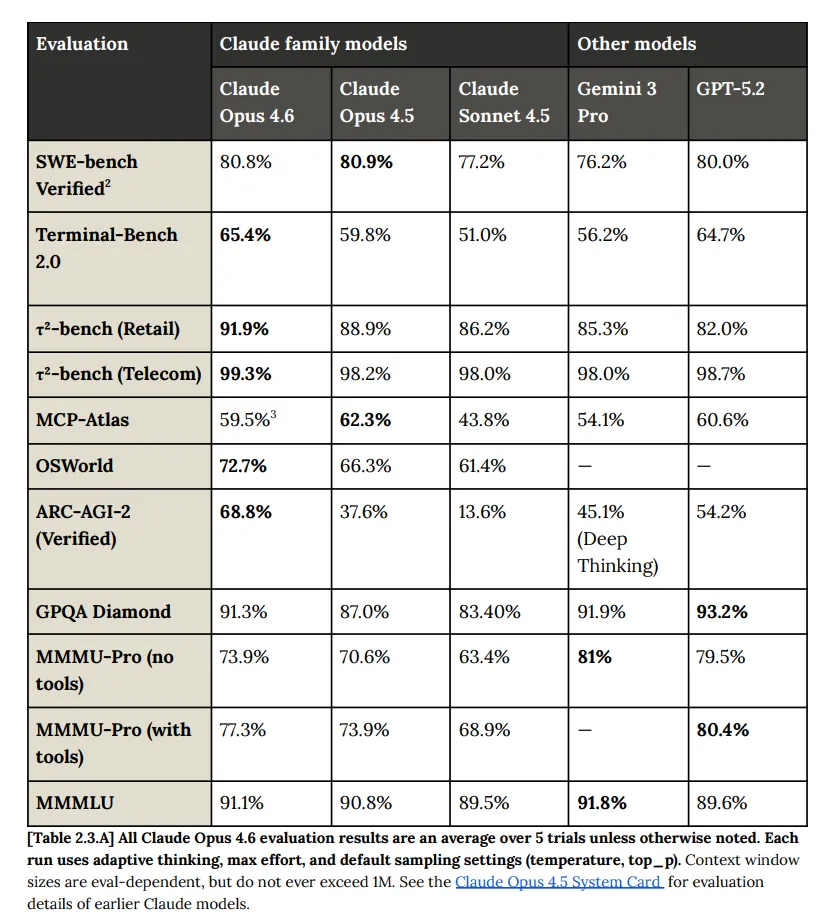
Según información oficial, Claude Opus 4.6 ha establecido nuevos récords en la industria:
| Categoría | Punto de referencia | Puntaje | Posición en la industria |
| Tareas de valor económico | PIBval-AA | 1606 Elo | Lidera GPT-5.2 por ~144 puntos; confiabilidad superior en Finanzas/Legal. |
| Generalización lógica | ARC-AGI 2 | 68.80% | Casi el doble de la puntuación de Opus 4.5 (37.6%). |
| Codificación agencial | Terminal-Bench 2.0 | 65.40% | La puntuación de codificación autónoma más alta de la industria. |
| Conocimiento experto | El último examen de la humanidad | Puntuación máxima | Clasificado #1 en razonamiento a nivel experto interdisciplinario. |
Cómo acceder a Claude Opus 4.6
Los usuarios pueden integrar este potente modelo a través de varios canales flexibles:
Canales oficiales de Claude:Disponible ahora para Claude Pro, Equipo, Empresa, y el nuevo Máximo usuarios de niveles a través de la interfaz web.
Inteligencia artificial de iWeaver:Poco después del lanzamiento, Inteligencia artificial de iWeaver Claude Opus 4.6 integrado. La ventaja de iWeaver sobre la interfaz web estándar es la menor barrera de entrada: los usuarios no necesitan gestionar entornos API ni diseñar indicaciones complejas. Además, permite cambiar con un solo clic entre diferentes modelos insignia según las necesidades específicas de cada tarea.
Integración de API:Los desarrolladores pueden llamar al modelo a través de Claude Opus 4-6 identificador. Tenga en cuenta que el Ventana de contexto 1M Actualmente se encuentra en versión Beta.
Plataformas de nube empresarial:
- Amazon Bedrock:Admite distribución global de nodos para necesidades de alta concurrencia.
- Microsoft Foundry en Azure:Ahora vive en regiones como East US 2.
- Inteligencia artificial Vertex de Google Cloud:Admite el modo de pensamiento adaptativo de forma sincrónica.
El lanzamiento de Claude Opus 4.6 representa el éxito de Anthropic en el equilibrio razonamiento precisión con escalabilidad de ingenieríaPara usuarios profesionales que manejan lógica extrema o conjuntos de datos masivos, este modelo ofrece actualmente la solución más robusta del mercado.