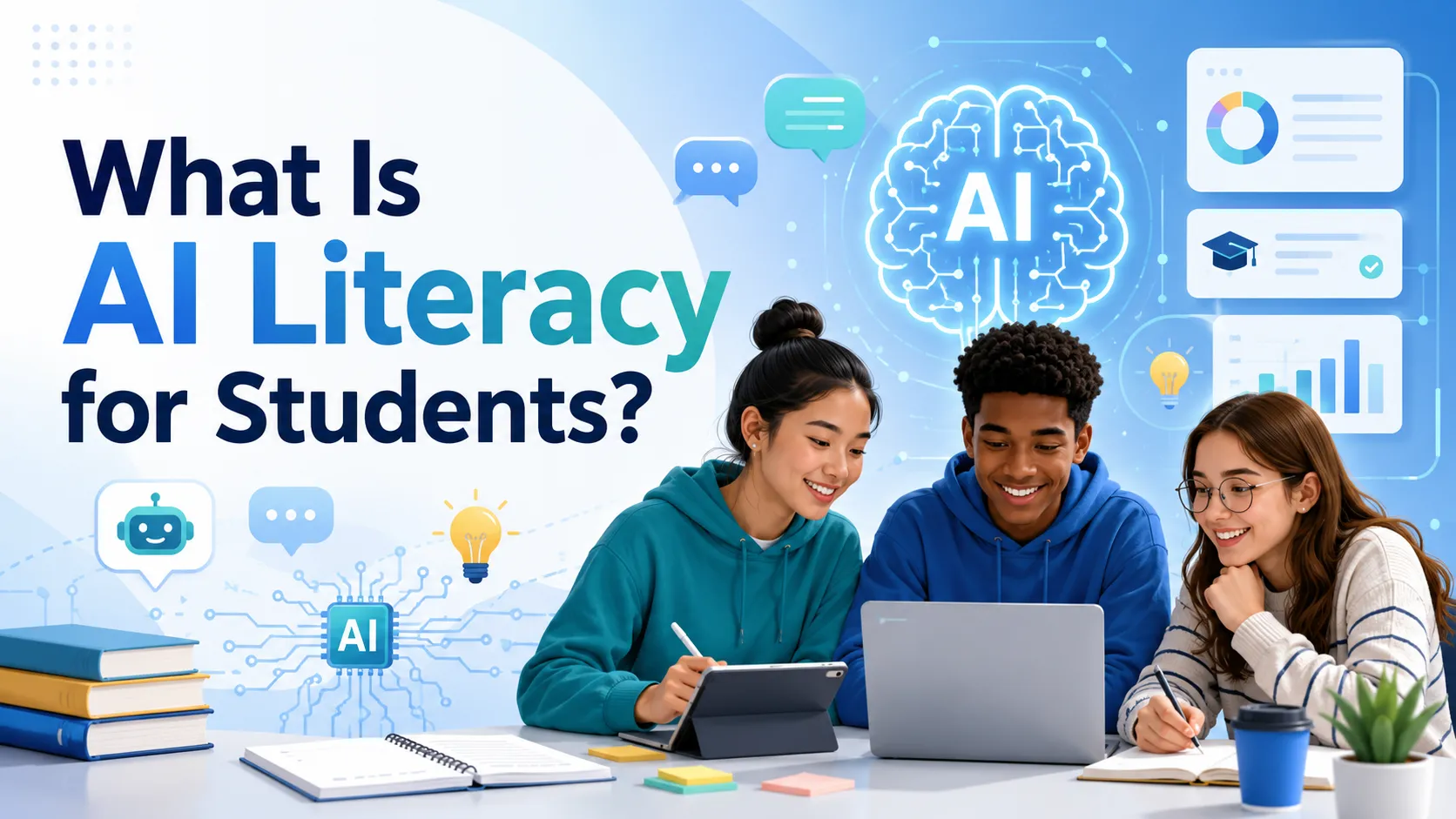
AI literacy for students means understanding how AI can support learning, where AI can fail, and how to use AI responsibly. It is not only about knowing what artificial intelligence is. It is about building judgment.
A student with AI literacy can ask better questions, check whether an answer is accurate, notice missing context, protect personal information, and follow classroom rules. Just as students learn how to evaluate websites, cite sources, and avoid plagiarism, they now need practical habits for working with AI.
AI literacy matters because students are already meeting AI in search results, writing tools, note-taking apps, study platforms, school software, and everyday technology. The question is no longer whether students will use AI. The real question is whether they can use it thoughtfully.
Why AI Literacy Matters in School
AI can explain a difficult concept, summarize a long reading, create practice questions, or help organize notes. Used well, it can make learning more active and personalized.
Used carelessly, it can create problems. AI may give incorrect answers, invent sources, repeat bias, oversimplify complex issues, or help students skip the thinking an assignment was designed to build. That is why AI literacy belongs beside research skills, writing skills, and digital citizenship.
For U.S. students, AI literacy is especially important because classroom rules vary. One teacher may allow AI for brainstorming. Another may ban AI for take-home essays. A college course may require disclosure. A high school assignment may allow AI only for study questions. Students need the habit of checking expectations before using support.
Core AI Literacy Skills for Students
Understand the Role
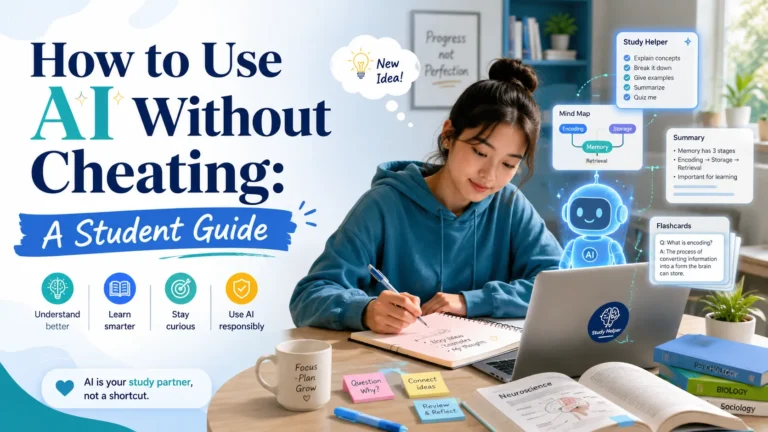
AI should support learning, not replace it. Students can use AI to clarify, practice, compare, summarize, and plan. The final understanding, judgment, and submitted work still belong to the student.
Ask Better Questions
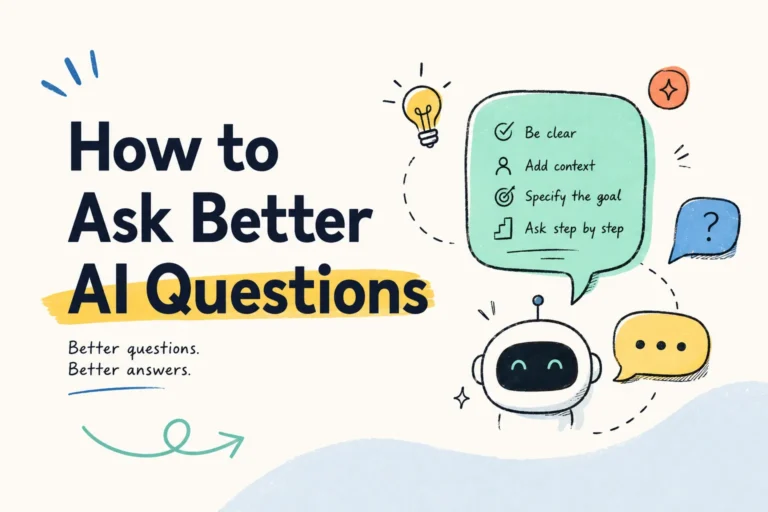
Good prompts include context, task, level, and desired format. Instead of asking, “Explain photosynthesis,” a stronger prompt is: “Explain photosynthesis for a 10th-grade biology student using my class notes, then give three practice questions.”
Check Accuracy
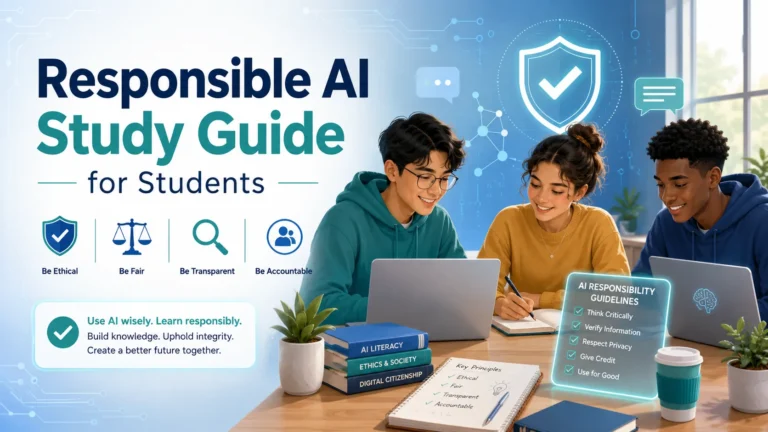
AI outputs should be checked against class notes, textbooks, teacher materials, credible websites, and primary sources. If the answer affects a grade, a citation, or a decision, verification is not optional.
Watch for Bias
AI can reflect patterns in the information it was trained on. Students should ask what viewpoint is missing, whose perspective is centered, and whether the response oversimplifies a social, historical, scientific, or cultural topic.
Proteja sua privacidade
Students should avoid sharing personal information, private school details, student records, passwords, addresses, or sensitive family information. A good rule is simple: if it should not be posted publicly, think carefully before entering it into any online tool.
Follow Academic Rules
AI use should match the assignment instructions. Students should ask teachers when expectations are unclear and disclose AI use when required by school or course policy.
How Students Can Use AI Responsibly
For Studying
Students can ask for explanations, examples, flashcards, practice questions, and study plans. iWeaver can help organize notes, summarize class materials, and turn topics into review prompts while keeping the work tied to source materials.
For Research
AI can help brainstorm research questions, organize source notes, and identify related topics. Students should still use credible sources, verify claims, and cite original materials rather than treating AI output as evidence.
For Writing
AI can support brainstorming, outlining, counterargument planning, and revision questions. Students should write the final draft in their own voice and follow teacher rules for disclosure.
For Group Projects
AI can help teams organize roles, timelines, and discussion questions. The group should still make decisions, verify sources, and produce original analysis.
AI Literacy Checklist for Students
- Did I check the assignment rules?
- Did I use AI to support learning, not replace my work?
- Did I provide enough context in my prompt?
- Did I verify important claims with trusted sources?
- Did I protect private information?
- Did I think about bias or missing perspectives?
- Did I write the final answer in my own words?
- Did I disclose AI use if required?
Where iWeaver Fits
iWeaver can support AI literacy by helping students work from their own materials. Notes, PDFs, readings, and study guides can become summaries, explanations, questions, and organized review plans. This keeps the learning process closer to the classroom context and gives students more to verify.
The goal is not to make school easier by skipping the hard parts. The goal is to make the hard parts clearer, more structured, and easier to practice.
FAQs About AI Literacy for Students
What is AI literacy for students?
AI literacy is the ability to understand, question, evaluate, and responsibly use AI for learning and daily tasks.
Is AI literacy only for computer science students?
No. AI literacy is useful for any student who studies, writes, researches, searches online, or uses digital tools.
Can AI help students learn better?
Yes, when students use AI for explanation, practice, organization, feedback, and reflection rather than answer copying.
What is the biggest risk of using AI for school?
The biggest risk is treating AI output as automatically correct or submitting work that does not reflect the student’s own thinking.
Should students disclose AI use?
Students should follow teacher, school, or course policy. When rules are unclear, asking first is the safest choice.