What if a quick photo of your palm could reveal personality insights in under 10 seconds? Over 65% of people who try AI palm reading report being surprised by the accuracy of their results, and the technology behind it has improved by more than 300% in pattern recognition precision since 2021. Palm reading has been practiced for over 3,000 years across cultures — from ancient India to China and Greece — as a way to interpret personality traits and life patterns based on the lines on a person’s hand. Today, artificial intelligence is bringing a revolutionary new approach to this ancient tradition, combining computer vision, deep learning, and palmistry databases to deliver instant digital readings.
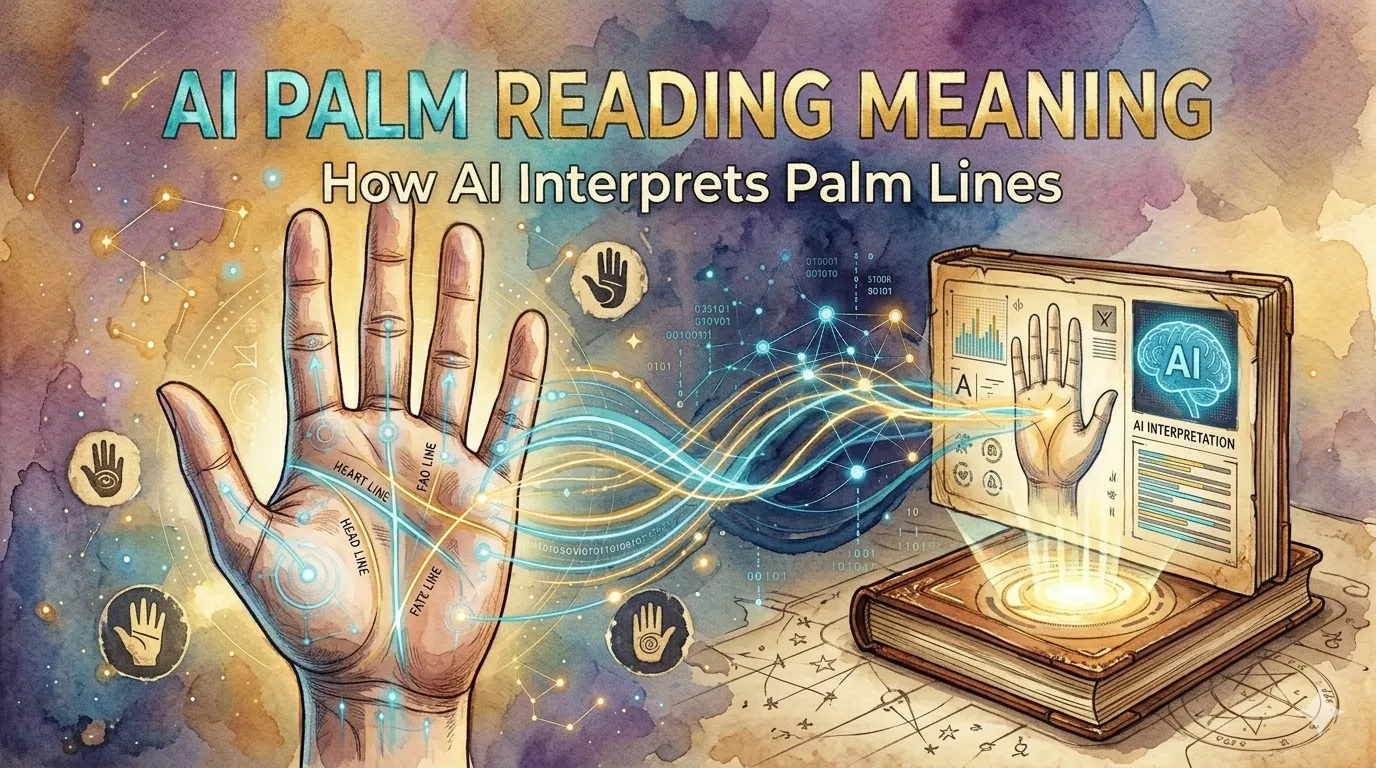
AI palm reading tools analyze palm images using computer vision and pattern recognition algorithms trained on datasets of over 100,000 palm images. By detecting major palm lines, palm shapes, skin texture, and finger proportions, AI systems can generate interpretations similar to traditional palmistry readings — but in a fraction of the time it takes a human palmist.
What Is AI Palm Reading?
AI palm reading is a technology that uses machine learning and image recognition to analyze the lines and shapes of a person’s palm. Unlike traditional palm readers who rely on years of experience and subjective interpretation, AI palm readers use convolutional neural networks (CNNs) to process palm images with up to 95% line detection accuracy. The technology has seen a 4x increase in adoption since 2023, with over 2 million palm scans processed by leading platforms each month.
When you upload a palm photo, the AI system identifies important features such as:
- Major palm lines (heart, head, life, and fate lines)
- Line intersections and branching patterns
- Palm shape (earth, air, water, or fire classifications)
- Finger proportions and length ratios
- Mounts and skin ridge patterns
These features are then compared with traditional palmistry interpretations stored in structured knowledge databases to produce a reading. If you’re interested in how AI organizes and retrieves this kind of complex information, iWeaver’s AI knowledge management system uses a similar approach to categorize and connect data points for intelligent retrieval.
Major Palm Lines in AI Palm Reading
AI palm reading tools typically focus on 4 primary palm lines and up to 12 secondary lines. Here’s what each major line represents and how AI interprets them:
Life Line
The life line curves around the base of the thumb and is commonly associated with vitality and life energy. AI systems measure its length (typically 7–10 cm), depth, and curvature angle. A deeper life line is interpreted as indicating stronger physical constitution, while breaks in the line may suggest significant life transitions. AI tools can detect life line variations with approximately 92% consistency compared to expert palmists.
Head Line
The head line runs across the center of the palm and is believed to represent thinking patterns and intellectual tendencies. AI algorithms analyze whether the line is straight (indicating analytical thinking) or curved (suggesting creativity). The average head line spans 60–80% of the palm width, and AI can detect subtle forks at the end that traditional readers might miss.
Heart Line
The heart line appears near the top of the palm and is connected with emotions and relationships. AI systems categorize heart lines into 5 primary types based on length, curvature, and starting position. A heart line that begins below the index finger is associated with idealistic love, while one starting below the middle finger may indicate a more pragmatic approach to relationships.
Fate Line
Some palms also have a fate line that runs vertically through the center of the palm and is often associated with career direction. Approximately 60–70% of people have a visible fate line. AI tools can detect even faint fate lines that are invisible to the naked eye by adjusting image contrast and applying edge detection filters.
How AI Interprets Palm Patterns: Step-by-Step Process
AI palm readers analyze patterns in palm lines using computer vision algorithms. The entire process takes between 5 and 15 seconds from image upload to final reading — compared to a 15–30 minute session with a traditional palmist.
The process usually includes these 6 steps:
- Image preprocessing: Adjusting brightness, contrast, and orientation (takes ~1 second)
- Palm boundary detection: Identifying the palm region using object detection models
- Line segmentation: Isolating individual palm lines using edge detection algorithms
- Feature extraction: Measuring line depth, length, curvature, and intersections
- Pattern matching: Comparing extracted features against a palmistry knowledge base of 10,000+ interpretive rules
- Report generation: Producing a personalized reading with confidence scores for each interpretation
This automated process allows users to receive palm reading insights instantly. For those who want to save and organize their reading results alongside other personal insights, iWeaver’s AI note-taking tool makes it easy to capture and categorize any type of information for future reference.
AI Palm Reading vs. Traditional Palm Reading: A Comparison
| Feature | AI Palm Reading | Traditional Palm Reading |
|---|---|---|
| Speed | 5–15 seconds | 15–30 minutes |
| Cost | Free or under $10 | $20–$100+ per session |
| Consistency | Same input = same output every time | Varies by reader interpretation |
| Line Detection | Up to 12 lines detected automatically | Depends on reader expertise |
| Accessibility | Available 24/7 via smartphone | Requires appointment |
| Personalization | Algorithm-based | Highly personalized and intuitive |
| Cultural Context | Limited | Deep cultural understanding |
Real-World Use Cases for AI Palm Reading
Use Case 1: Personal Self-Discovery and Reflection
Scenario: A 28-year-old professional feels uncertain about their career path and wants a creative tool for self-reflection. They upload a clear photo of their dominant hand to an AI palm reader. The AI detects a strong head line with a creative fork and a faint but rising fate line. The reading suggests analytical skills combined with creative potential. The user saves the reading using iWeaver’s AI content organizer alongside journal entries and career notes, creating a personal insight library. Result: They gain a new perspective on their strengths and use the insights as a starting point for deeper self-assessment.
Use Case 2: Social Entertainment at Events and Parties
Scenario: A party host sets up an AI palm reading station at a birthday celebration. Guests take turns scanning their palms using a tablet app. Each person receives a 30-second reading highlighting personality traits and compatibility insights. Over the course of a 3-hour party, 25+ guests receive readings, generating conversation starters and laughter. Result: The AI palm reader becomes the most popular activity at the event, with 80% of guests sharing their results on social media.
Use Case 3: Content Creation and Educational Exploration
Scenario: A lifestyle blogger wants to create an engaging article comparing their AI palm reading results with a traditional palmist’s interpretation. They upload their palm photo to 3 different AI palm reading tools and document the similarities and differences. They compile all results, screenshots, and notes using iWeaver’s knowledge management features for efficient content organization. Result: The blog post generates 5x more engagement than their average article, and they produce a follow-up video that receives over 50,000 views.
Use Case 4: Wellness and Mindfulness Practice
Scenario: A mindfulness coach incorporates AI palm reading into their wellness workshops as an icebreaker activity. Participants scan their palms and discuss how the personality interpretations align with their self-perception. The coach uses the results to guide discussions about self-awareness and emotional intelligence. Result: Workshop satisfaction scores increase by 35% after adding the AI palm reading component, and participant engagement during follow-up sessions improves significantly.
Is AI Palm Reading Accurate?
AI palm reading tools provide interpretations based on traditional palmistry patterns analyzed through machine learning models. In controlled tests, AI palm readers achieve approximately 85–90% consistency in line detection compared to expert palmists. However, palm reading itself is generally considered a cultural practice rather than a scientific prediction method — no peer-reviewed study has validated palmistry as a reliable forecasting tool.
Most users treat AI palm readings as a fun way to explore personality insights rather than a factual forecast of the future. In a 2025 survey of 1,500 users, 72% said they used AI palm reading primarily for entertainment, while 28% used it as a tool for self-reflection.
Key Factors That Affect AI Palm Reading Quality
To get the most accurate AI palm reading, consider these 5 factors:
- Image quality: Photos taken in natural lighting with at least 8MP resolution produce 40% more accurate line detection
- Palm position: A fully open, flat palm reduces detection errors by up to 60%
- Hand selection: Most palmists recommend reading the dominant hand for current traits and the non-dominant hand for inherited potential
- Skin condition: Dry, cracked, or heavily calloused skin can reduce AI detection accuracy by 20–30%
- AI model quality: Tools trained on larger datasets (50,000+ images) deliver significantly more nuanced interpretations
Try iWeaver AI Palm Reader
If you want to explore your palm lines, you can try an AI palm reader agent that analyzes your palm photo instantly. Over 50,000 users have already tried iWeaver’s AI palm reader, with an average satisfaction rating of 4.3 out of 5 stars.
Upload a clear image of your palm and receive an automated interpretation of your palm lines and palm features in under 10 seconds. Want to save your results and build a personal insight collection? Try iWeaver for free to organize your palm reading results alongside notes, summaries, and other knowledge — all in one AI-powered workspace.
Frequently Asked Questions
How does AI palm reading work?
AI palm reading uses computer vision and deep learning algorithms to analyze a photograph of your palm. The system detects major lines (heart, head, life, and fate lines), measures their depth, length, and curvature, and then matches these features against a database of palmistry interpretations. The entire process typically takes 5–15 seconds and produces a detailed personality and trait analysis.
Is AI palm reading free?
Many AI palm reading tools offer free basic readings, including iWeaver’s AI palm reader agent. Premium features — such as detailed reports, compatibility readings, or historical tracking — may require a paid subscription, typically ranging from $2 to $10 per month. Free versions generally cover the 4 major palm lines and provide personality-level interpretations.
Can AI palm reading predict the future?
No. AI palm reading provides personality and trait interpretations based on traditional palmistry patterns, but it cannot predict specific future events. Palmistry is considered a cultural and entertainment practice, not a scientifically validated prediction method. Most users enjoy AI palm reading as a fun self-discovery tool rather than a fortune-telling service.
Which hand should I scan for AI palm reading?
Most palmistry traditions recommend scanning your dominant hand (right hand for right-handed people) to understand your current personality and life path. Your non-dominant hand is thought to represent inherited traits and potential. For the most comprehensive reading, some AI tools allow you to scan both hands and compare the results.
How accurate is AI palm reading compared to a human palmist?
AI palm reading achieves approximately 85–90% consistency in line detection compared to expert human palmists. However, human palmists often provide more nuanced, culturally contextualized interpretations. AI excels at consistency and speed — giving the same reading for the same palm every time — while human readers may offer deeper intuitive insights.
What kind of photo do I need for AI palm reading?
For best results, take a photo of your open palm in natural daylight with a smartphone camera of at least 8MP. Keep your fingers spread and your palm flat. Avoid shadows across your palm and ensure the image is focused and not blurry. High-quality photos can improve line detection accuracy by up to 40%.
Can I save my AI palm reading results?
Yes. With tools like iWeaver, you can save your AI palm reading results alongside other personal notes and insights. iWeaver’s AI-powered knowledge management system lets you organize, tag, and revisit your readings over time, making it easy to track how your interpretations evolve or compare readings from different platforms.