
AI Lecture Summarizer for Clear Study Notes
Upload lecture recordings, videos, slides, or class notes. iWeaver turns your course material into clear lecture summaries with key concepts, definitions, and organized study notes for easier review.
How to Summarize a Lecture with AI
Upload Your Lecture Material
Upload a lecture recording, MP3 audio file, MP4 video, PDF handout, PowerPoint presentation, or class notes. Add the material you want to review without manually rewriting it first.
Generate a Lecture Summary
iWeaver reviews the material and organizes the main topics, key definitions, important explanations, and examples into a readable lecture summary.
Review and Refine Your Notes
Read the summary, revisit important concepts, and ask follow-up questions about difficult topics. You can also request a topic-by-topic outline or review questions for your next study session.
What Is an AI Lecture Summarizer?
An AI lecture summarizer turns recorded classes, presentations, and written course materials into shorter, organized summaries. Instead of working through an entire lecture again, students can review its main ideas, definitions, explanations, and supporting examples in one place.
A useful lecture summary does more than shorten a transcript. It shows how topics connect, separates essential concepts from supporting details, and gives you a clearer starting point for revision. You can use it after a university lecture, during an online course, or when preparing for an exam.
A brief overview, topic-by-topic study notes, key terms, important examples, and questions to help you review what you learned. The details depend on the material you upload and the instructions you provide.
Why Use iWeaver as Your AI Lecture Summarizer?
Focus on Key Lecture Concepts
Find the main arguments, definitions, and explanations in a lecture without getting lost in every sentence. iWeaver organizes the important points so you can understand what the lesson is about.
Spend Less Time Replaying Recordings
Start with a concise overview instead of listening to a full recording whenever you need to review one topic. Use the summary to identify which parts of the original lesson deserve another look.
Keep Definitions and Examples Together
Important terms make more sense when they stay connected to the examples used to explain them. Turn lecture content into structured notes that preserve those connections for later review.
Work with Different Lecture Materials
Summarize class recordings, video lessons, presentation slides, PDFs, and written notes. Whether you missed part of a lecture or want to revisit an explanation, you can work from the material you already have.
Ask Questions After Summarizing
A summary is only the beginning. Ask follow-up questions about unfamiliar terms, compare related concepts, or request a study outline based on your uploaded lecture material.
Use Cases for AI Lecture Summarizer

University Lectures
University classes often introduce several connected ideas in one session. Upload lecture recordings or presentation slides and organize the main explanations, definitions, and examples into notes you can revisit before tutorials, assignments, or weekly reviews.
Summarize a Lecture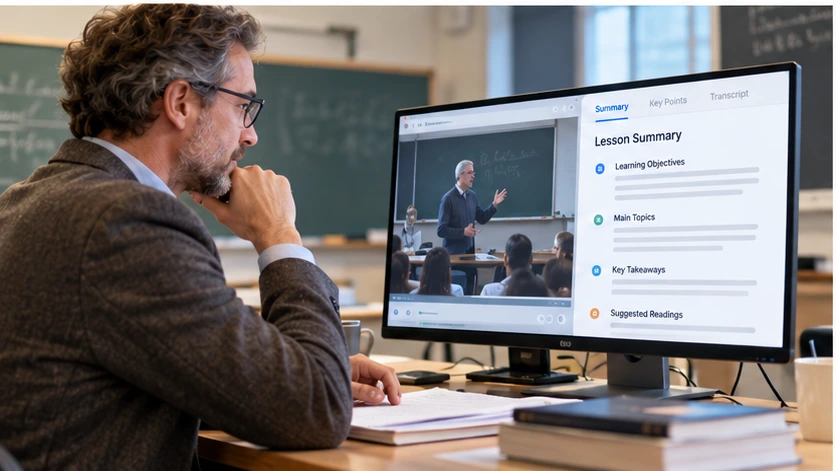
Exam Preparation
When exams approach, replaying every lecture can take more time than you have. Summarize previous classes into topic-based notes, identify concepts that need further attention, and create questions to check your understanding.
Prepare Study Notes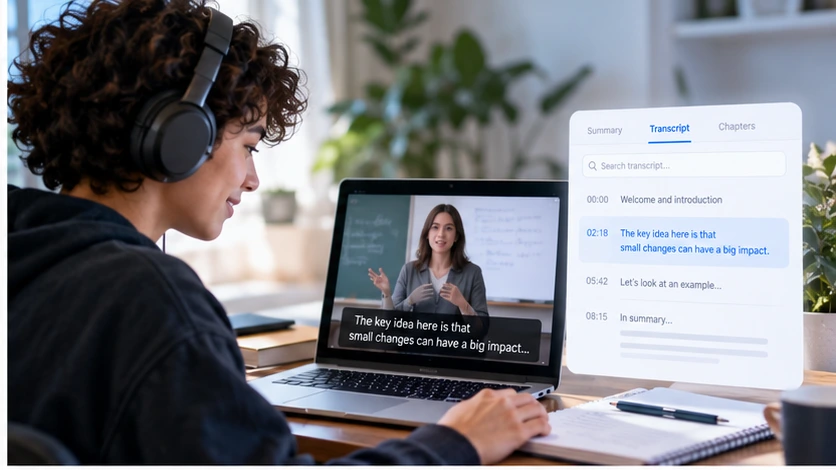
Online Courses and Video Lessons
Recorded lessons are convenient, but finding one explanation in a long video is not always easy. Convert course recordings into organized summaries so you can review the progression of ideas and return to the original lesson when needed.
Summarize a Lesson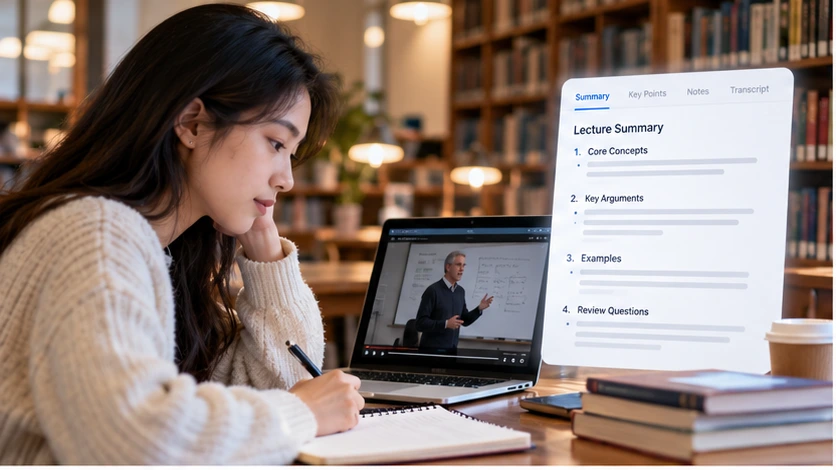
Teachers and Tutors
Turn lesson recordings, presentations, and teaching materials into concise class recaps. Use the summaries to help students review what was covered, revisit important examples, and identify topics that may need another explanation.
Create a Class RecapFrom a Long Lecture to Useful Study Notes
A good lecture summary helps you understand what was taught, not simply shorten every sentence. Here is one way to organize the material for revision.
Example: A 50-Minute Economics Lecture
Topic: Supply and Demand — An illustrative study-note structure
01. Main Topics
Demand versus quantity demanded, factors that shift the demand curve, and how markets reach equilibrium.
02. Key Terms
Demand curve, substitute goods, equilibrium price, supply shifts, and other concepts introduced in the lesson.
03. Lecture Examples
Keep the examples used by the instructor to explain how price changes and market conditions affect buyers and sellers.
04. Review Questions
What shifts a demand curve? How does a shortage affect price? What happens when supply increases while demand stays constant?
Try This Lecture Summary Prompt
Summarize this lecture into study notes. Organize the content by topic, identify important definitions, and retain examples that explain difficult ideas. End with five review questions based on the lecture. If a detail is unclear or missing from the source, flag it rather than guessing.
This is an illustrative example, not a summary generated from an uploaded recording. Actual results depend on the source material.
Frequently Asked Questions About Lecture Summarizing
Continue Studying with Related AI Tools
Your lecture summary is a starting point. Choose the next tool based on how you want to organize, remember, or review the material.
AI Notes Generator
Turn lecture materials, documents, and other sources into organized notes you can return to throughout the course.
Create Study Notes →📚Flashcard Generator
Convert key terms, definitions, and important ideas into question-and-answer cards for active recall and revision.
Make Flashcards →🎓AI Study Guide Maker
Bring lecture notes and course materials together in a structured study guide with important topics and practice questions.
Build a Study Guide →Turn Your Next Lecture into Study Notes
Upload a lecture recording, presentation, or class notes to get a clear summary of the main ideas. Review key concepts, explore difficult topics, and prepare for your next study session.
Summarize My Lecture