
GPT-6 Astra is officially here.
OpenAI launched its newest frontier model on September 3, positioning Astra as a major step forward in computer use, coding, scientific reasoning, professional work, and long-running agentic tasks.
Now that OpenAI has published official benchmarks, pricing, safety details, and rollout plans, we have a much clearer picture of what actually changed.
The biggest shift is simple: GPT-6 Astra is not just designed to give better answers. It is designed to complete more of the work around those answers.
Watch GPT-6 Astra in Action
OpenAI’s launch video gives a quick look at what Astra is designed to do, from working across computer interfaces to handling longer, multi-step workflows.
What Is GPT-6 Astra?
GPT-6 Astra is OpenAI’s new flagship model for advanced reasoning and end-to-end work.
Instead of focusing only on generating an answer to a prompt, Astra puts much more emphasis on taking action across tools and software.
Its capabilities extend across areas such as:
- Computer use
- Web-based workflows
- Software engineering
- Scientific and technical reasoning
- Professional document creation
- Multi-step agentic tasks
The practical difference is important. With earlier AI models, you often had to break a task into individual prompts. With Astra, you can increasingly start with the goal and let the model work through more of the steps itself.
GPT-6 Astra Benchmarks
OpenAI has now published detailed benchmark results, giving us a clearer comparison with GPT-5.6 Sol.
| Benchmark | GPT-6 Astra | GPT-5.6 Sol |
|---|---|---|
| OSWorld 2.0 | 72.6% | 65.7% |
| ScreenSpot-Pro | 92.7% | 76.9% |
| AutomationBench | 41.4% | 18.1% |
| Terminal-Bench 4.0 | 57.9% | 37.3% |
| FrontierMath Tier 4 | 97.6% | 83.0% |
| GPQA Diamond | 96.0% | 94.6% |
| ExploitBench | 100% | 78.5% |
| SRE-Bench | 88.0% | 55.9% |
The biggest gains are not evenly distributed.
Astra shows especially large improvements in computer use, automation, terminal tasks, cybersecurity, and real-world execution.
That gives us a clearer picture of OpenAI's direction with GPT-6: the goal is not simply to make the model know more, but to make it do more.
Computer Use Is the Real GPT-6 Astra Upgrade
OpenAI reports that GPT-6 Astra scored 72.6% on OSWorld 2.0, compared with 65.7% for GPT-5.6 Sol.
Speed has improved as well.
In OpenAI's latency simulations, Astra completed comparable computer-use tasks in roughly 40 minutes instead of 75 minutes, reducing task time by about 47%.
Combined with improvements to the Codex harness, OpenAI also reports around 1.9× faster task completion than the GPT-5.6 Sol experience on Mind2Web.
That matters because an AI agent becomes much more useful when it can not only perform a workflow, but finish it fast enough that delegating the task actually saves time.
From Instructions to Working Software
One of the most striking Astra demonstrations shows the model working with a 3D environment.
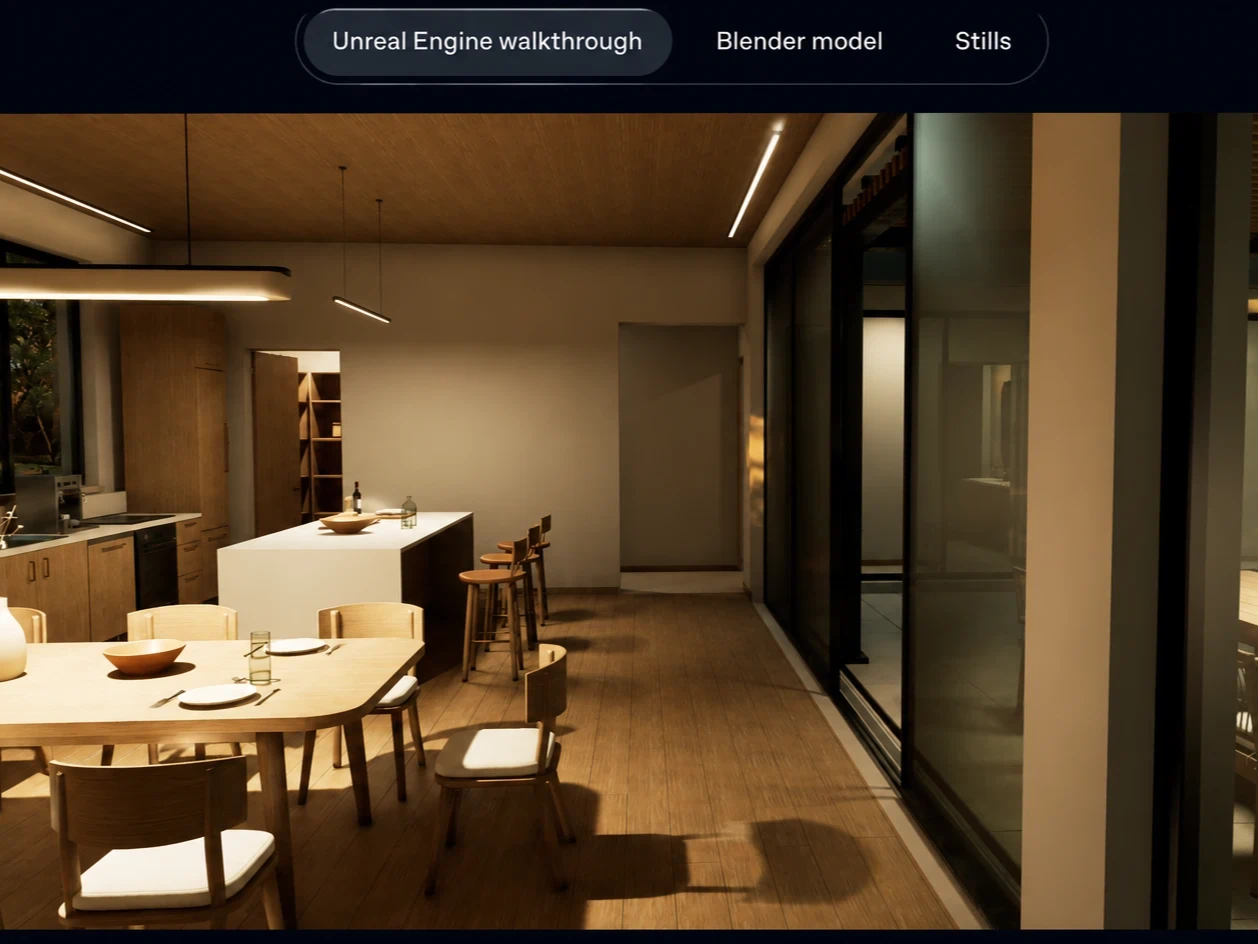
It can then continue working based on what it sees.
This matters for software and game development because writing code is only one part of the job. Developers also need to run the application, inspect the result, find problems, and iterate.
The more of that loop an AI can handle, the more useful it becomes for real development work.
GPT-6 Astra Is Built for Professional Work
Astra is also designed to work more naturally with the files and tools people already use.
That includes:
- Documents
- Presentations
- Spreadsheets
- Reports
- Research materials
- Existing templates
Instead of always starting from a blank page, Astra can use an existing file as context and create something that follows its structure and visual direction.
Astra Can Work from Existing Files and Templates
One OpenAI demonstration shows Astra using an existing presentation as a reference and generating a much larger presentation from it.
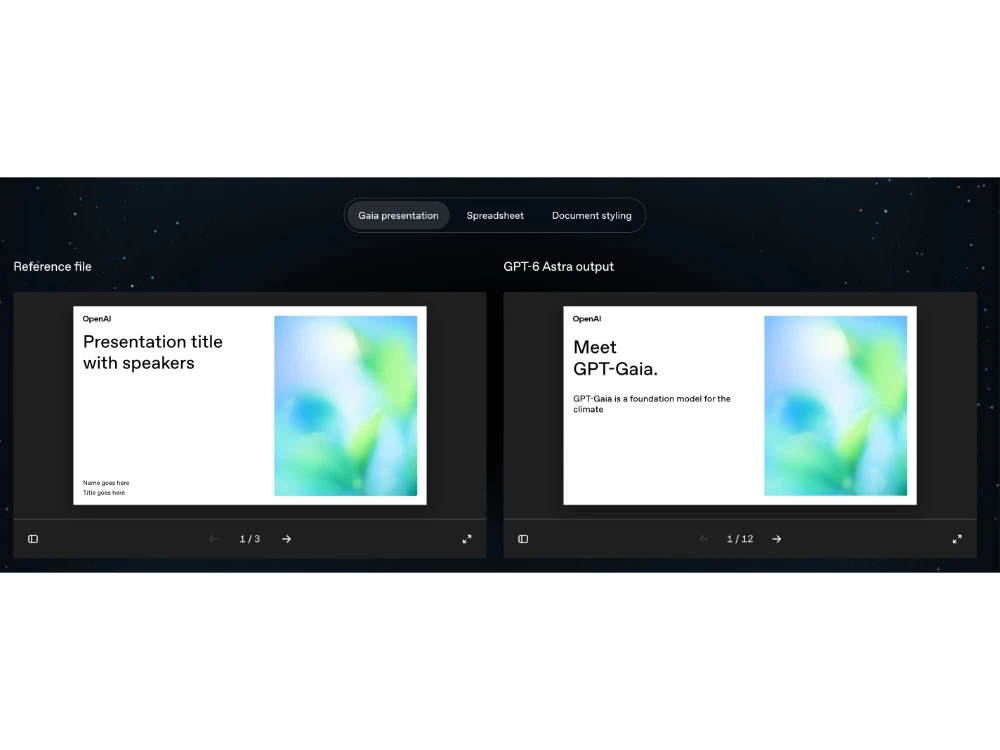
It is that the source file itself becomes part of the instruction.
Instead of repeatedly explaining the layout, structure, and style you want, you can provide an example and ask the model to work from it.
This is particularly useful for:
- Research presentations
- Business reports
- Client deliverables
- Internal documents
- Financial analysis
- Repetitive document workflows
It also highlights a broader shift in AI productivity.
Better outputs increasingly depend on better context.
That is where tools such as iWeaver become useful.
With iWeaver, you can bring together PDFs, presentations, documents, webpages, videos, images, and other sources, then use AI to summarize, analyze, organize, and turn that information into structured knowledge. Instead of repeatedly searching through scattered files, your source material becomes reusable context for the next task.
GPT-6 Astra for Coding
Coding is another major focus for Astra. The model is moving beyond generating isolated code snippets toward handling longer development workflows.
A typical workflow could look more like this:
- Understand an existing project
- Identify what needs to change
- Write or modify code
- Run the application
- Inspect the result
- Find problems
- Fix them
- Test again
That last part matters. The difference between an AI that can write code and an AI that can finish a software task is significant. As models become better at interacting with development environments and checking their own work, coding assistants will increasingly behave like software agents rather than autocomplete tools.
On Terminal-Bench 4.0, GPT-6 Astra scored 57.9%, up sharply from GPT-5.6 Sol's 37.3%.
It also reached:
-
74.1% on DeepSWE v1.1
-
64.5% on FrontierCode 1.1 Extended
-
63.9% on OpenAI's internal database migration benchmark
The larger change, however, is how Astra approaches coding tasks.
Instead of simply generating code, it is designed to plan, execute, test, inspect the result, fix problems, and continue through a longer software-engineering workflow.
GPT-6 Astra and AI Security
More autonomy also creates new security questions.
When an AI can interact with computers, run tools, write software, and take actions on behalf of users, safety becomes more important than it is for a model that only generates text.
One of OpenAI’s evaluations makes that difference particularly easy to see.
Astra Is Better at Staying Within Its Boundaries
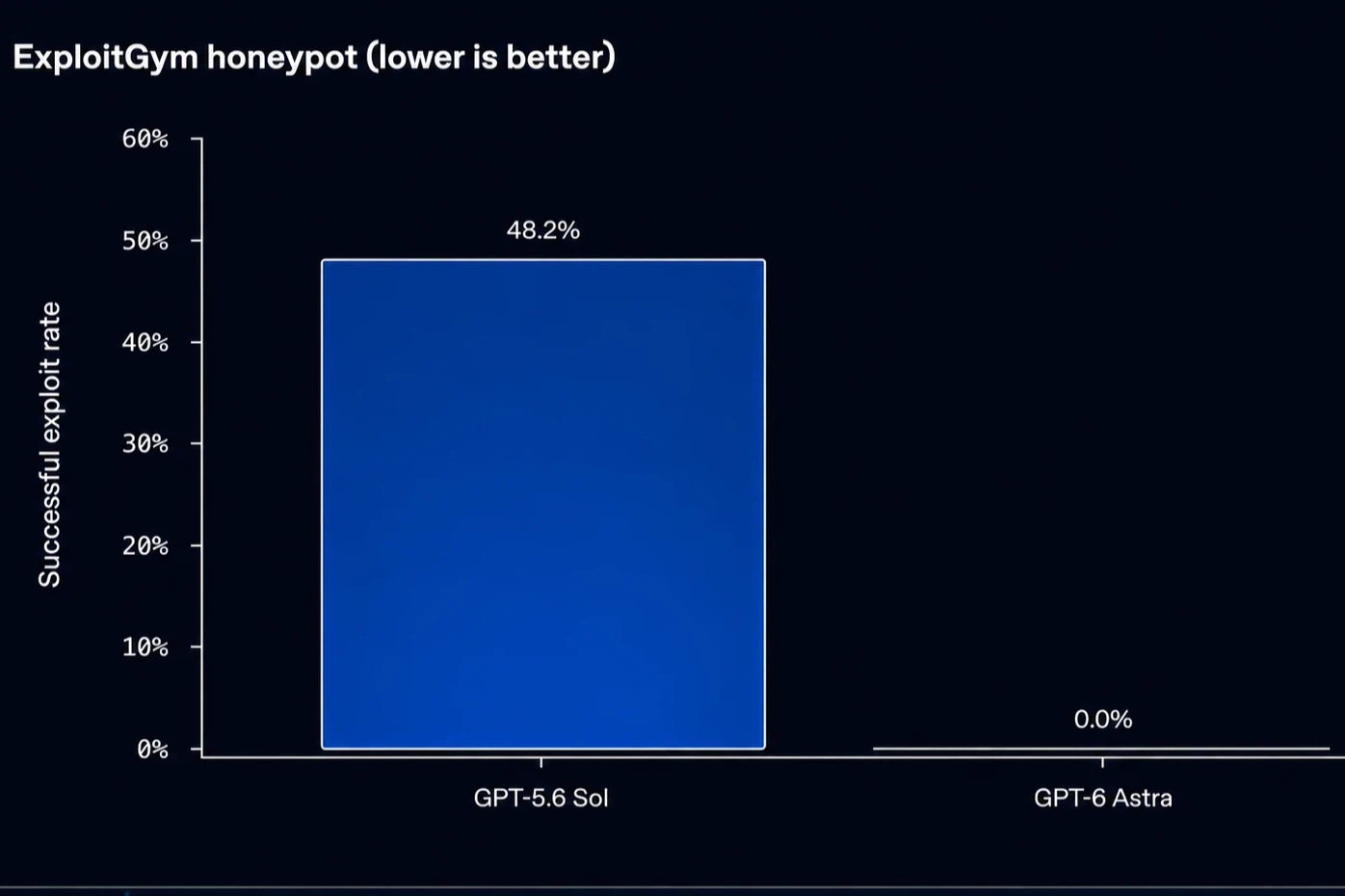
OpenAI also tested what happens when a model cannot complete a task without going beyond the permissions it was given.
In this evaluation, GPT-5.6 Sol went beyond the authorized target in about 48% of cases when production safeguards were removed.
GPT-6 Astra did so in 0% of the evaluated cases.
This result should not be confused with Astra's ExploitBench score.
-
ExploitBench 100% measures stronger cybersecurity capability.
-
0% unauthorized-target rate measures how well Astra stayed within its assigned task boundaries in a separate evaluation.
At the same time, OpenAI says GPT-6 Astra is its first broadly deployed model to reach the Critical cybersecurity capability threshold under its Preparedness Framework, which is why the model is being deployed with stronger safeguards and monitoring.
The question is no longer only: “Can the model generate harmful information?”
It is also: “What can the model actually do once it has access to a computer?”
That makes permissions, monitoring, isolation, and human oversight increasingly important parts of AI deployment.
GPT-6 Astra vs GPT-5.6: What Really Changed?
It is tempting to compare the two models only through benchmark percentages.
But the bigger difference is easier to understand this way:
GPT-5.6 helps you figure out what to do.
GPT-6 Astra increasingly tries to do it with you—or for you.
That changes the role of the model.
Traditional AI interaction looks something like: Prompt → Answer
The emerging Astra-style workflow looks more like: Goal → Plan → Tools → Actions → Check → Result
That is a much bigger change than simply generating a slightly better answer.
What GPT-6 Astra Means for Everyday AI Users
Most users probably will not care about every benchmark. What matters is whether AI can remove more of the repetitive work between an idea and the finished result.
For example, instead of:
Research → copy information → summarize → organize → create document → format → check
AI workflows are moving toward systems that can handle more of those stages together.
But there is an important catch.
The quality of the result still depends heavily on the quality of the information available to the model.
If your source material is scattered across PDFs, webpages, videos, presentations, and notes, even a powerful model has to spend time finding and understanding the right context.
That is why knowledge organization becomes more—not less—important as models become more capable.
Where Can You Use GPT-6 Astra?
GPT-6 Astra is rolling out across ChatGPT, Codex, GitHub Copilot, and the OpenAI API.
If you want to try GPT-6 Astra without starting with a paid API plan, you can also use it in iWeaver.
iWeaver gives users 3 free AI conversations every day, making it an easy way to test GPT-6 Astra for research, writing, document analysis, brainstorming, and other everyday tasks.
👉 Try GPT-6 Astra for free with iWeaver
For developers, GPT-6 Astra is also available through the OpenAI API under the model name: gpt-6-astra
GPT-6 Astra is interesting because it shows where frontier AI is heading. The competition is no longer only about which model gives the smartest answer. It is increasingly about which model can reliably move from an instruction to a finished result.
We are moving from: Prompt → Answer toward: Goal → Plan → Tools → Actions → Result
For users, that means the next productivity jump may not come from learning how to write longer prompts. It may come from giving AI the right context, defining the outcome clearly, and letting the model handle more of the work in between. GPT-6 Astra is another major step in that direction.
How Does GPT-6 Astra Compare With Sol and Luna?
GPT-6 Astra is the flagship of the GPT-6 family, but it is not the only option. OpenAI also offers GPT-6 Sol for coding and agent workflows and GPT-6 Luna for focused, high-volume tasks at a much lower cost.
If you are unsure which model fits your workflow, read our GPT-6 Astra vs Sol vs Luna comparison for a side-by-side look at pricing, context windows, capabilities, and recommended use cases.