
Most generative AI creates something you look at.
World Labs wants AI to create something you can move through.
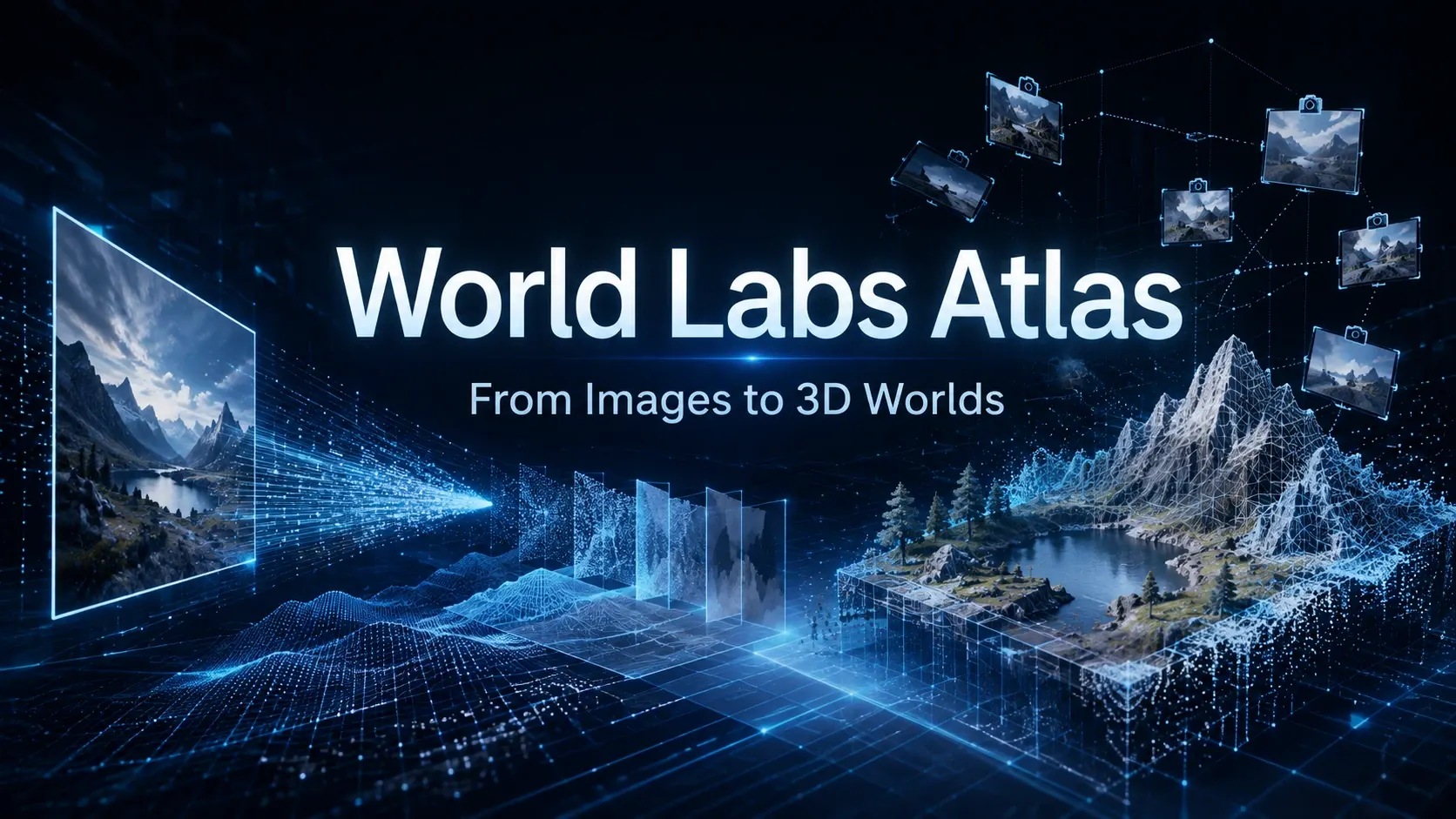
Now, World Labs introduced Atlas, a new multimodal world model built around what the company calls spatial intelligence.
Give Atlas an image and it can generate new camera views, reconstruct the scene in 3D, create controlled video movements, and even simulate environments for robotics.
That makes Atlas much more interesting than another image or video generator.
What Is World Labs Atlas?
Atlas is what World Labs calls an omni world model.
It was trained to work across:
- text
- images
- video
- camera positions
- 3D depth information
Instead of seeing an image only as pixels, Atlas tries to understand where objects exist in space and how the scene may continue beyond the original frame.
Imagine uploading a photo of a room.
A normal image generator might create another image that looks similar.
Atlas tries to understand the room as a space.
It can then move the camera to a new position and generate what should appear from that angle.
That is a very different problem.
The Big Feature: Camera Control
AI video models have improved quickly, but camera control can still feel unpredictable.
You might write:
Move the camera slowly around the character.
The model still decides what "around" actually means.
Atlas takes a different approach.
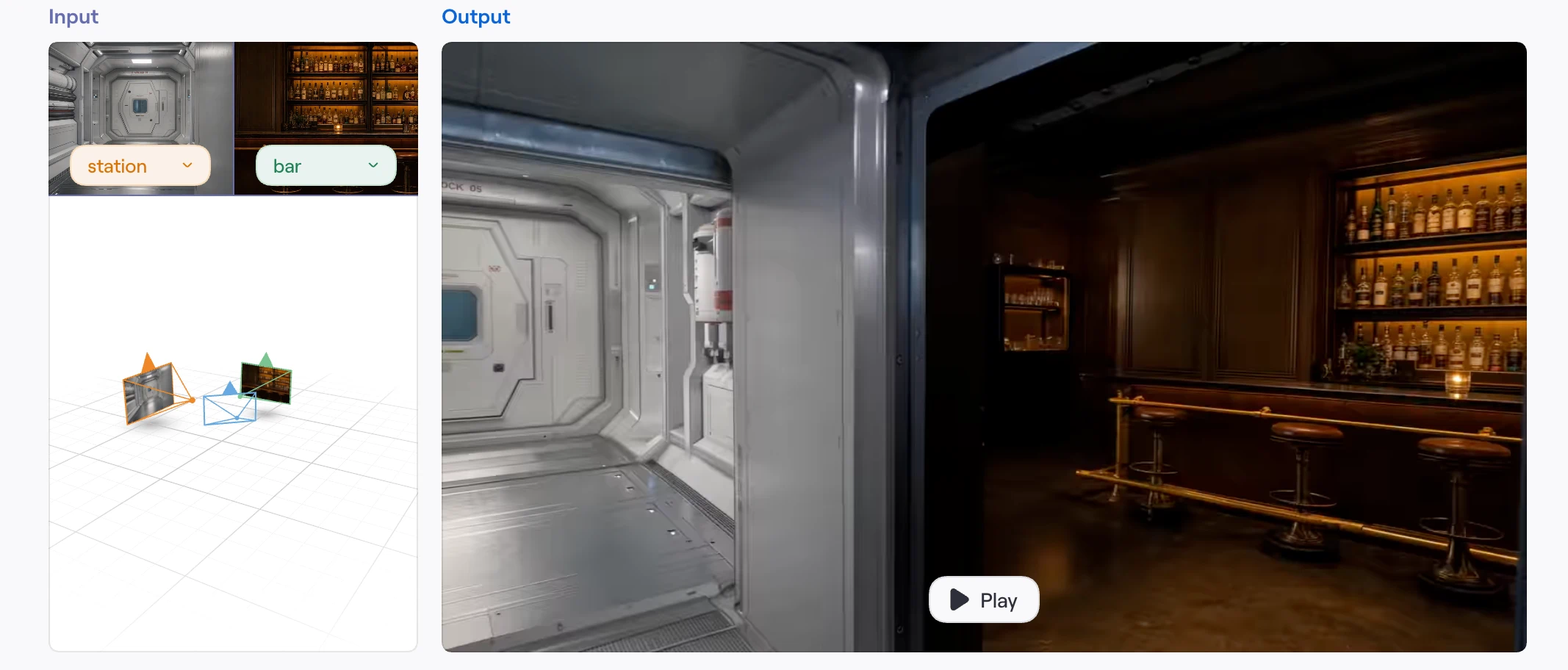
Camera geometry can be used directly as an input, giving creators more precise control over:
- camera position
- viewing angle
- movement path
- shot changes
World Labs describes this as pixel-perfect camera control.
That could be useful for:
- filmmaking
- game development
- advertising
- virtual production
- architecture
- 3D visualization
Instead of generating a clip again and again until the camera happens to move the right way, creators can define the movement more directly.
Atlas Can Generate Longer, Controlled Video
World Labs says Atlas can generate video up to one minute at 1440p, using reference images and designed camera paths.
The interesting part is not only the duration.
It is consistency.
When a camera moves through a generated environment, objects need to remain in the right places.
A door should not suddenly move to another wall.
A table should not disappear when the camera turns around.
The structure of the scene needs to stay consistent as the viewpoint changes.
Maintaining that spatial consistency is one of the main problems Atlas is designed to solve.
From One Image to a 3D Scene
Atlas can also work as a reconstruction model.
It can take one or more images of a real place and generate views from positions that were never photographed.
With more reference images, Atlas has more evidence and needs to invent less of the missing scene.
The model can also generate explicit 3D representations, including:
- point clouds
- 3D Gaussian splats
That means Atlas output may be useful beyond normal image and video generation.
A reconstructed scene could eventually move into:
- games
- simulation
- VFX
- design tools
- robotics
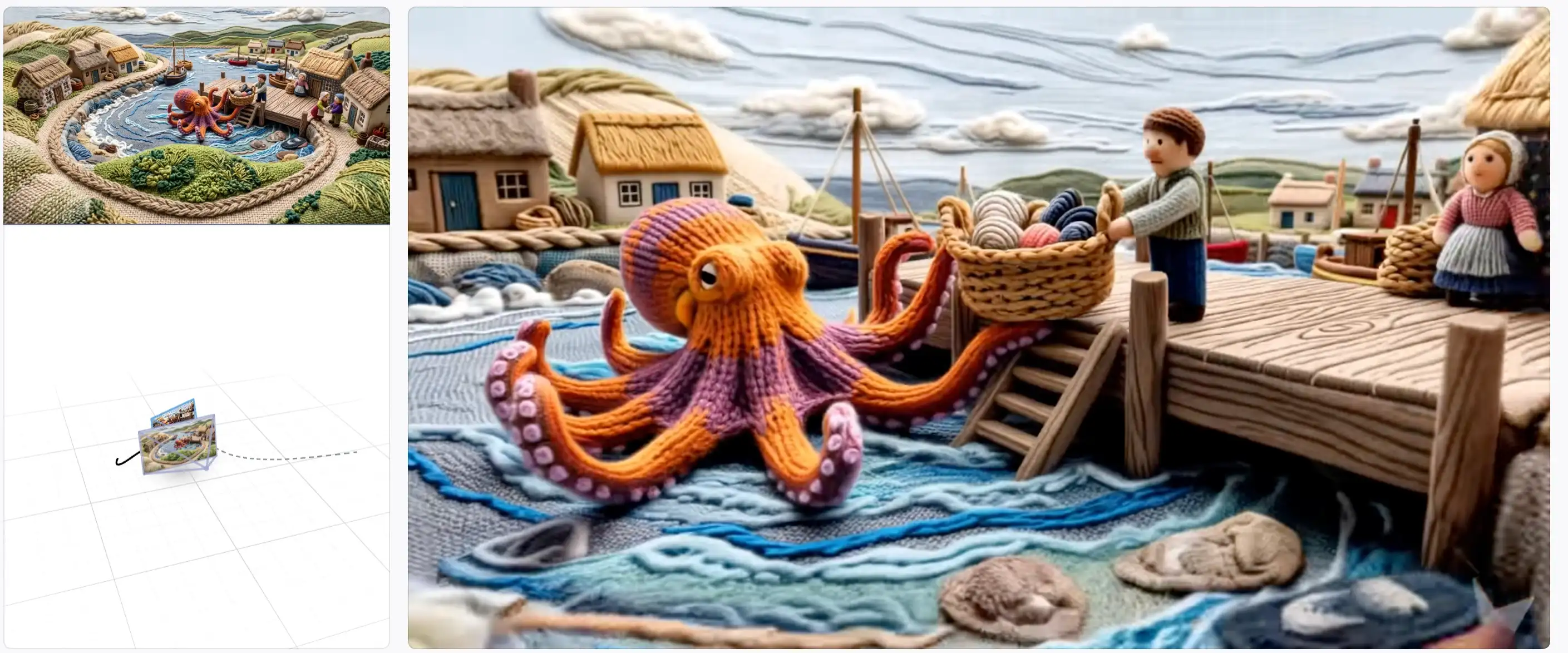
Atlas can generate new views and scene geometry from images, then turn the result into a 3D representation such as Gaussian splats. Source: World Labs.
Why Atlas Is Called a World Model
The term world model is becoming increasingly important in AI.
Large language models mainly learn relationships between words, concepts, and information.
World models try to learn relationships between objects, space, movement, and time.
That difference matters.
An AI system controlling a robot does not only need to know that a chair is a chair.
It also needs to understand:
- where the chair is
- how large it is
- whether the robot can move around it
- what may happen if something pushes it
- what the chair would look like from another angle
This type of spatial understanding is what World Labs calls spatial intelligence.
Atlas Could Matter for Robotics
One of the most interesting Atlas use cases has little to do with creating beautiful videos.
It is robotics.
Training robots in the real world is expensive and slow.
Simulation can help, but building realistic simulated environments also takes time.
Atlas offers another approach.
It can turn recordings of real environments into simulated spaces and generate the visual and depth information a robot may see while moving through them.
That creates a possible workflow like this:
Record a real environment → Reconstruct it → Simulate variations → Train or test a robot
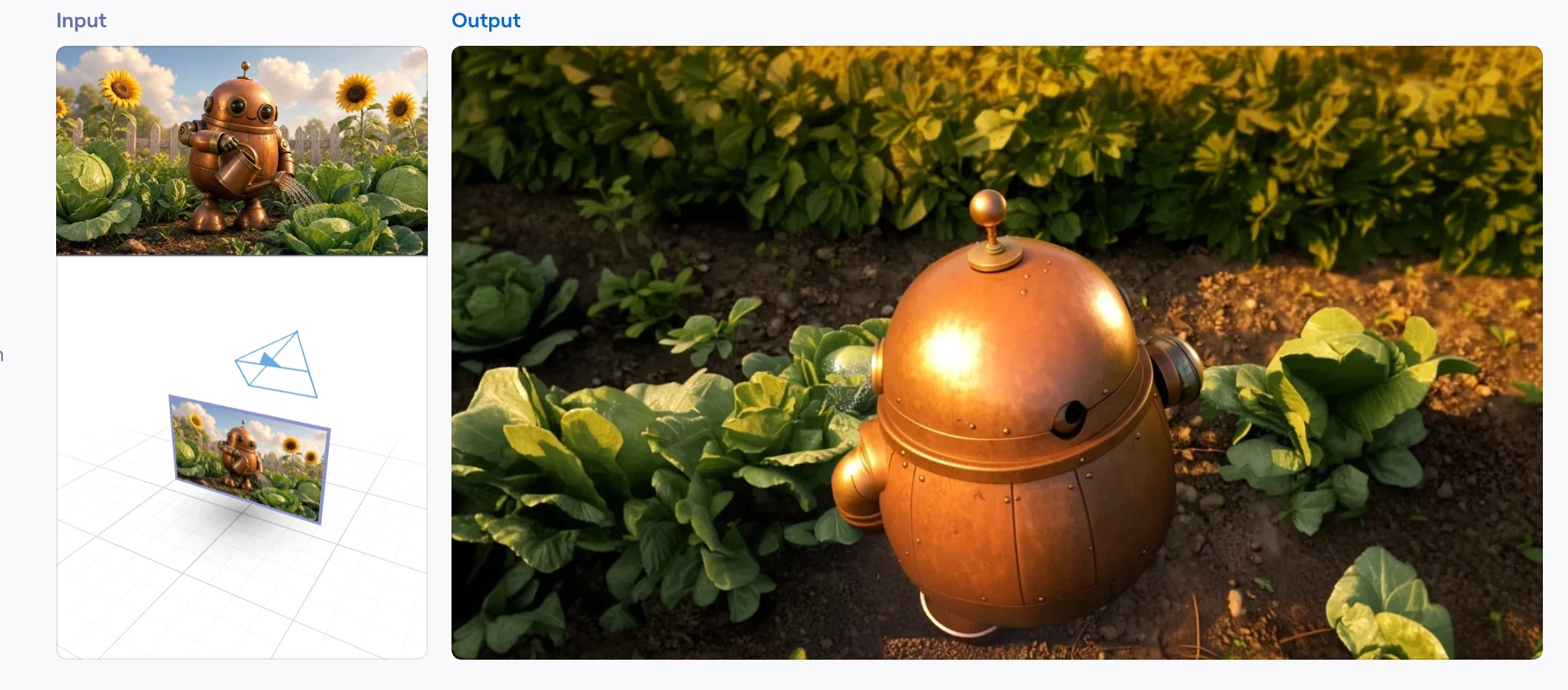
If this works reliably at scale, world models could become important infrastructure for physical AI.
Atlas Is Also an Image Generator
Atlas can still perform more familiar generative AI tasks.
It can generate:
- images from text
- different visual styles
- text inside images
- 360-degree panoramas
But image generation is not really the main point.
Atlas treats each image as one possible view into a larger world.
That idea is what separates it from most traditional image-generation tools.
Atlas vs Traditional AI Video Generation
A simple way to understand Atlas is to compare the goals.
| Traditional AI Video | World Labs Atlas |
|---|---|
| Generate a video | Generate or reconstruct a world |
| Camera controlled mainly by prompts | Camera geometry can be used directly |
| Focus on individual clips | Focus on spatial consistency |
| Mainly 2D output | Supports 2D and 3D output |
| Mainly creative content | Creativity, simulation, reconstruction, and robotics |
Atlas is not necessarily trying to replace every AI video generator.
It is solving a broader problem. You can also check out the official Atlas video from World Labs.
Where iWeaver Fits
New models like Atlas also create a research problem.
To understand a world model properly, you may need to review:
- official announcements
- technical reports
- research papers
- demo videos
- benchmark results
- user experiments
- competing models
Reading every source separately quickly becomes messy.
With iWeaver, you can bring PDFs, web pages, videos, and research notes into one workspace, summarize the technical material, compare different claims, and keep your conclusions connected to the original sources.
That is especially useful for fast-moving topics like world models.
The goal is not simply to know that a new AI model launched.
It is to understand what actually changed.
Can You Try Atlas Now?
Atlas is not yet available to everyone.
World Labs says the model is entering early access with selected partners.
General public availability has not been announced yet.
Atlas is also expected to support future versions of World Labs' Marble products.
For most users, the current release is therefore more of a preview of where spatial AI is heading than an everyday tool they can immediately add to their workflow.
Final Thoughts
Generative AI has spent the last few years getting much better at producing text, images, and video.
Atlas points toward the next question:
Can AI understand the space behind those images?
If world models continue to improve, AI-generated content may become less about isolated images and clips and more about persistent environments that people, cameras, software, and robots can move through.
Atlas is still early.
But the direction is worth watching.