
Prompting Guide for Students: How to Ask Better AI Questions
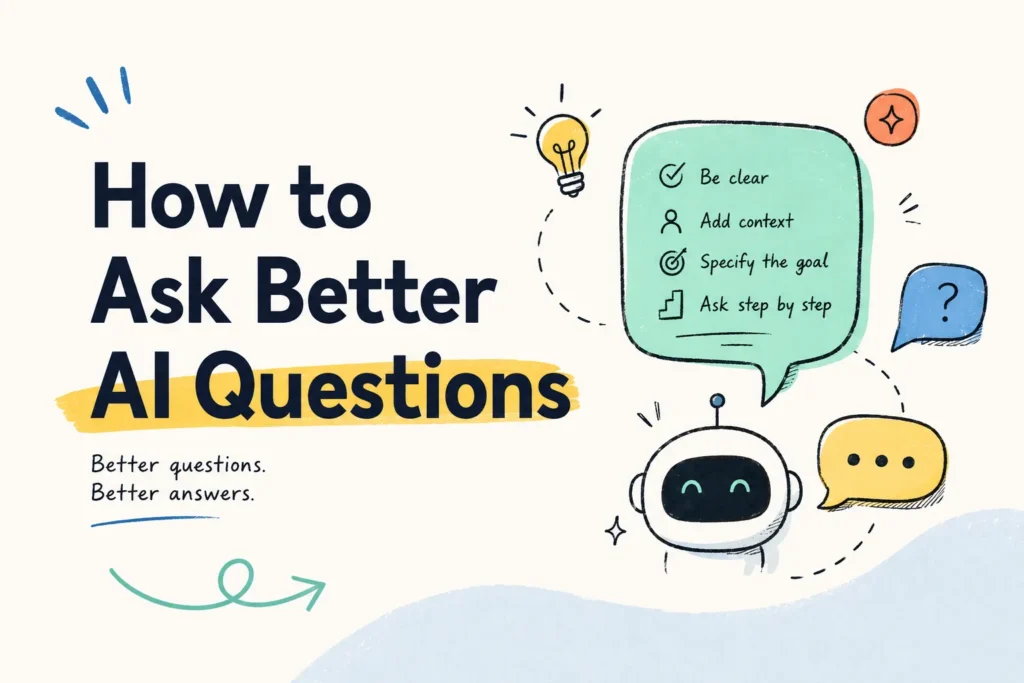
Why Prompting Matters for Students The quality of an AI response often depends on the quality of the question. A vague prompt usually leads to a vague answer. A clear prompt gives context, explains the task, sets the level, and names the output format. For students, prompting is not just a productivity skill. It is a learning skill. Better prompts can lead to clearer explanations, stronger practice questions, more useful feedback, and better study plans. Prompting also supports responsible AI use. When students ask for explanation, practice, feedback, or planning, they are more likely to learn. When they ask for finished answers, they risk skipping the thinking their assignments are […]
Responsible AI Study Guide for Students
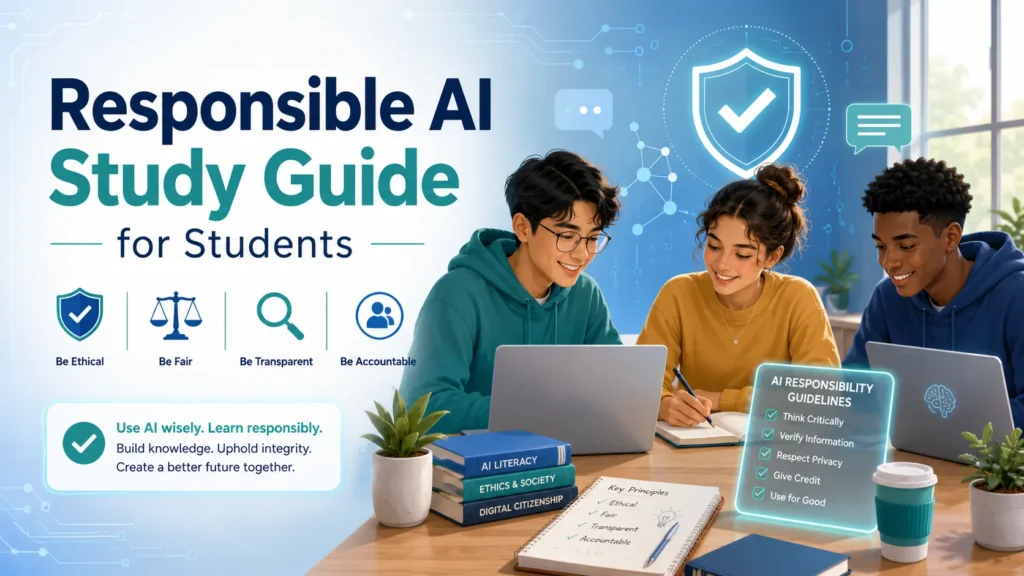
What Is a Responsible AI Study Guide? A responsible AI study guide helps students use AI in ways that support learning, protect privacy, and respect academic expectations. It gives students a practical process for deciding when to use AI, how to check outputs, and how to keep ownership of their work. Responsible AI is not only about avoiding cheating. It is also about building better judgment. Students need to know when an output may be wrong, when a source needs checking, when a prompt gives away too much private information, and when support has become substitution. Why Responsible AI Study Habits Matter AI can help students understand difficult material faster. […]
How to Use AI Without Cheating: A Student Guide
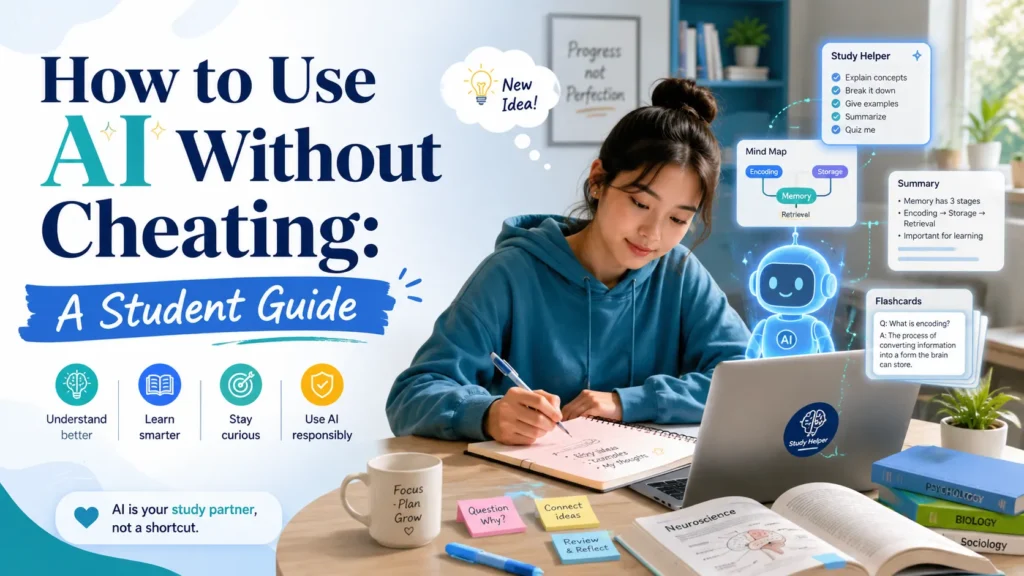
Can Students Use AI Without Cheating? Yes, students can use AI without cheating when the tool supports learning instead of replacing the student’s own work. The difference usually comes down to purpose, permission, transparency, and ownership. Using AI to explain a concept from class notes can be responsible. Asking AI to write an essay and submitting it as personal work is not. Using AI to create practice questions before a test can support learning. Copying AI-generated homework answers can cross an academic integrity line. Because schools and teachers set different rules, students should not assume one universal answer. A safe approach starts with the assignment instructions. The Simple Rule: Support, […]
AI Literacy for Students: What Every Learner Needs to Know
AI literacy for students means understanding how AI can support learning, where AI can fail, and how to use AI responsibly. It is not only about knowing what artificial intelligence is. It is about building judgment. A student with AI literacy can ask better questions, check whether an answer is accurate, notice missing context, protect personal information, and follow classroom rules. Just as students learn how to evaluate websites, cite sources, and avoid plagiarism, they now need practical habits for working with AI. AI literacy matters because students are already meeting AI in search results, writing tools, note-taking apps, study platforms, school software, and everyday technology. The question is no […]